The Hidden Cost of Digital Transformation: Stress and Burnout in Irish IT Teams
Digital transformation has become a defining priority for organisations across Ireland. From artificial intelligence and cloud platforms to cybersecurity, compliance and data-driven decision-making, technology now underpins how businesses operate, compete and grow.
But as the pace of change accelerates, an important issue is coming into sharper focus: the growing strain being placed on the people behind the technology.
Recent coverage in TechCentral.ie has highlighted rising stress and burnout across IT teams in large Irish organisations, with many leaders acknowledging that pressure levels are becoming unsustainable. As digital ambition grows, so too does the human cost of delivering it.
Rapid growth, rising pressure
Ireland’s position as a European technology leader is well established, but with growth comes complexity. Over the past two years, the scale and speed of digital adoption have increased dramatically.
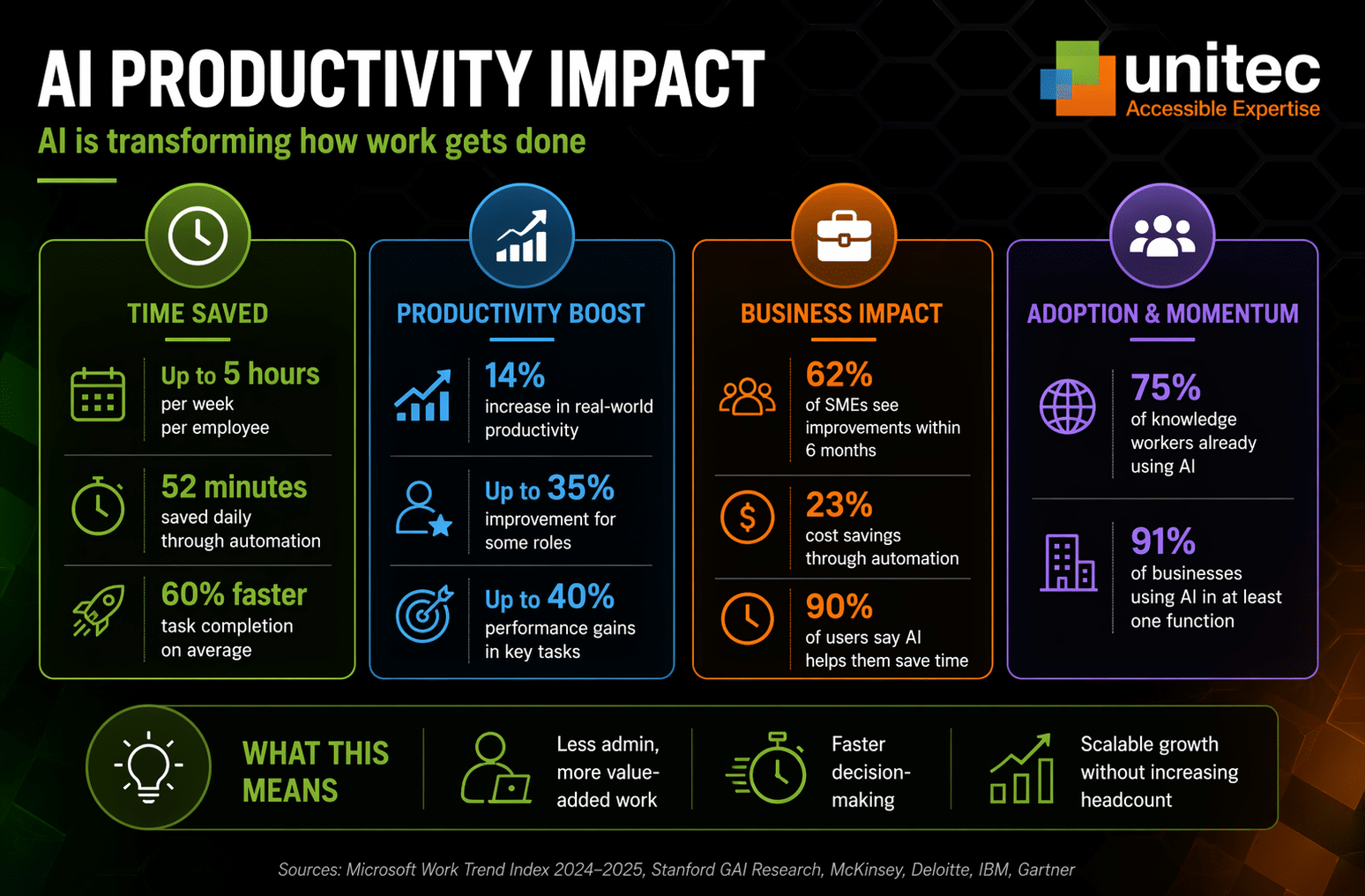
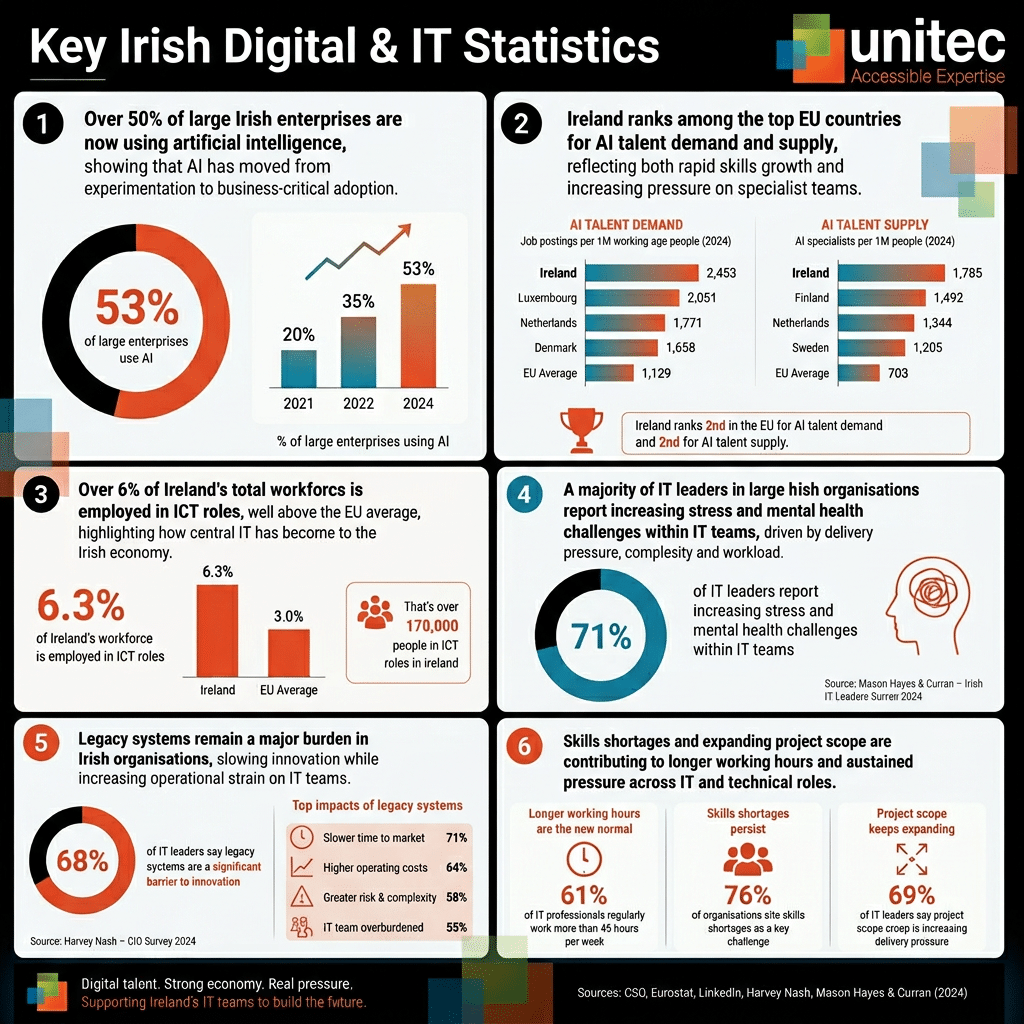
According to data from the Central Statistics Office, reported by RTÉ, over half of large Irish enterprises (50%+) are now using artificial intelligence in some form. AI is no longer future-facing — it is already embedded in business-critical operations, from workflow automation to data analysis and decision support.
Ireland also ranks among the top EU countries for AI talent demand and supply, reflecting the rapid expansion of advanced digital skills across the economy. At the same time, over 6% of Ireland’s total workforce is now employed in ICT roles, well above the EU average — underlining just how central IT has become to Irish business.
While this growth is positive, it has significantly intensified pressure on IT teams. More systems, more data, more regulation and more security exposure all translate into heavier workloads — often without corresponding increases in capacity.
Legacy systems, skills shortages and scope creep
The research highlighted by TechCentral.ie points to several recurring causes of stress within IT teams.
Legacy systems remain a major burden. Many organisations are attempting to innovate while still maintaining outdated platforms that are complex, fragile and time‑consuming to support. IT teams are expected to “keep the lights on” while also delivering modern, secure environments — a balancing act that becomes increasingly difficult at scale.
Scope creep is another major issue. As projects evolve, timelines compress and expectations expand, often without reassessment of resourcing or risk. Coupled with ongoing skills shortages across Ireland’s IT labour market, this results in longer hours, reactive working patterns and fatigue.
Although many organisations are offering higher salaries to retain talent, financial incentives alone cannot offset sustained operational pressure. Without structural change, stress and burnout remain a persistent risk.
Why managed IT services are part of the solution
At Unitec, we see these challenges reflected across organisations of all sizes, particularly SMEs and mid-sized businesses that may not have large internal IT teams.
As highlighted in TechCentral.ie, more Irish organisations are turning to outsourced and managed IT services to reduce pressure on internal teams — and for good reason.
A managed IT approach enables organisations to:
- Reduce day-to-day operational stress through proactive monitoring, maintenance and support
- Move away from constant firefighting, restoring predictability and control
- Modernise legacy systems in a structured, phased way, reducing risk and frustration
- Introduce realistic IT roadmaps, aligned with business priorities and delivery capacity
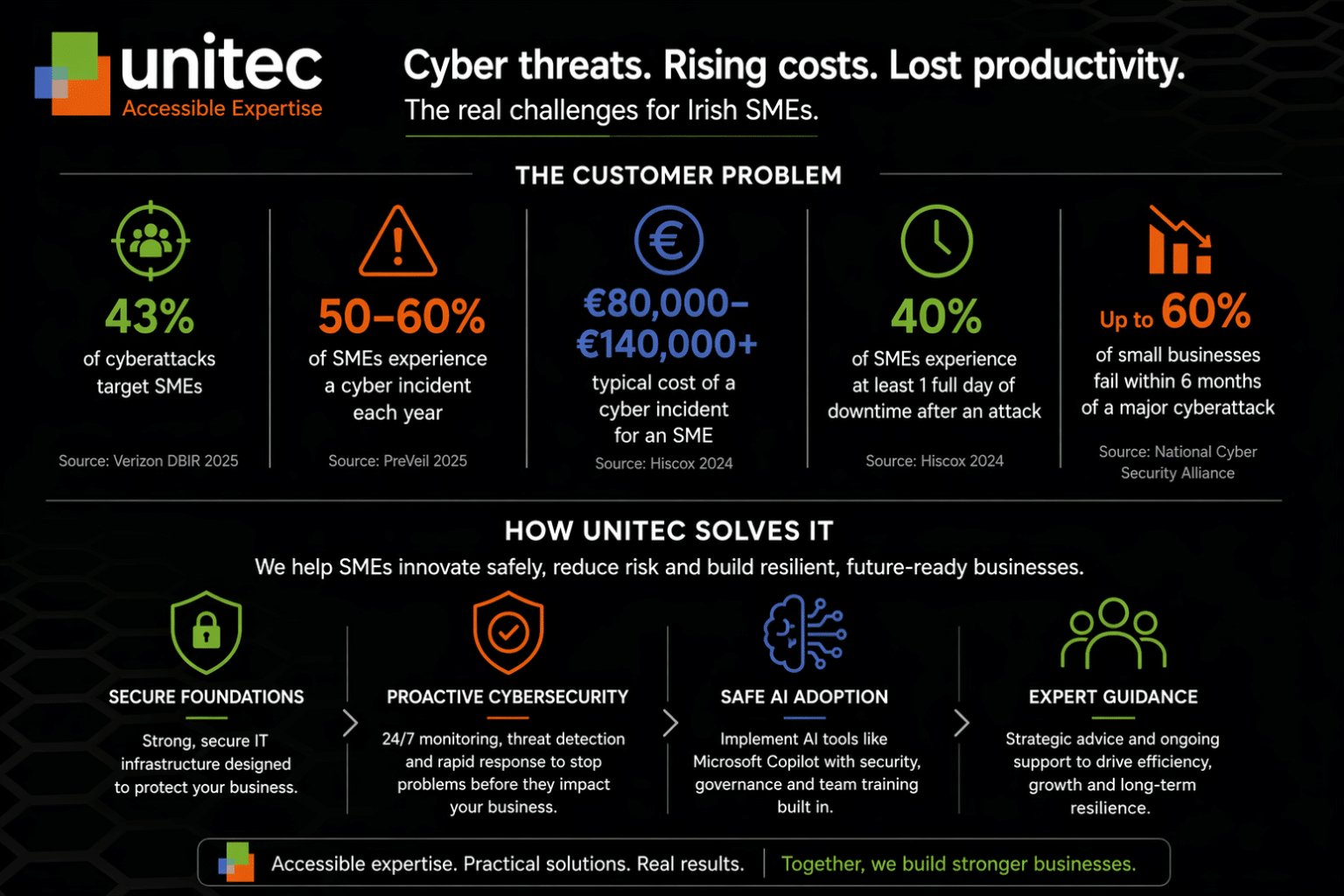
- Strengthen cybersecurity resilience, easing anxiety linked to threats, downtime and compliance
Rather than replacing internal teams, managed services support them — giving organisations access to specialist skills and capacity while protecting internal staff from overload.
Leadership must prioritise sustainability
From Unitec’s perspective, IT stress is no longer just an operational issue — it is a leadership issue.
“Digital transformation cannot succeed if IT teams are constantly operating under pressure,” said Ian Power, Managing Director of Unitec.
“When internal teams are stretched thin, working long hours just to keep systems running, the risk of burnout, security gaps and project failure increases. Managed IT services give organisations the breathing space to modernise safely while protecting their people.”
Sustainable IT environments require realistic planning, shared responsibility and clear alignment between business ambition and delivery capability.
Redefining digital success in Ireland
The message coming through from Irish research and industry commentary is clear: technology success cannot be measured by adoption alone. If organisations continue to drive transformation without addressing how work is delivered and supported, the long-term impact will be felt through employee burnout, skills loss and increased operational risk.
As Ireland continues to lead in AI adoption and digital innovation, businesses must also lead in how they support the people behind that progress.
By partnering with managed IT service providers like Unitec, organisations can reduce pressure, improve resilience and ensure digital transformation is not just technically successful — but sustainable. Contact Unitec on www.unitec.ie for a free consultation and find out how managed it services can support your business.