
Unitec IT Solutions Leading the Shift to Secure AI and Cyber Resilience for Irish SMEs
As businesses across Ireland accelerate their digital transformation, the conversation has moved beyond technology adoption to a more critical issue — how to innovate safely.
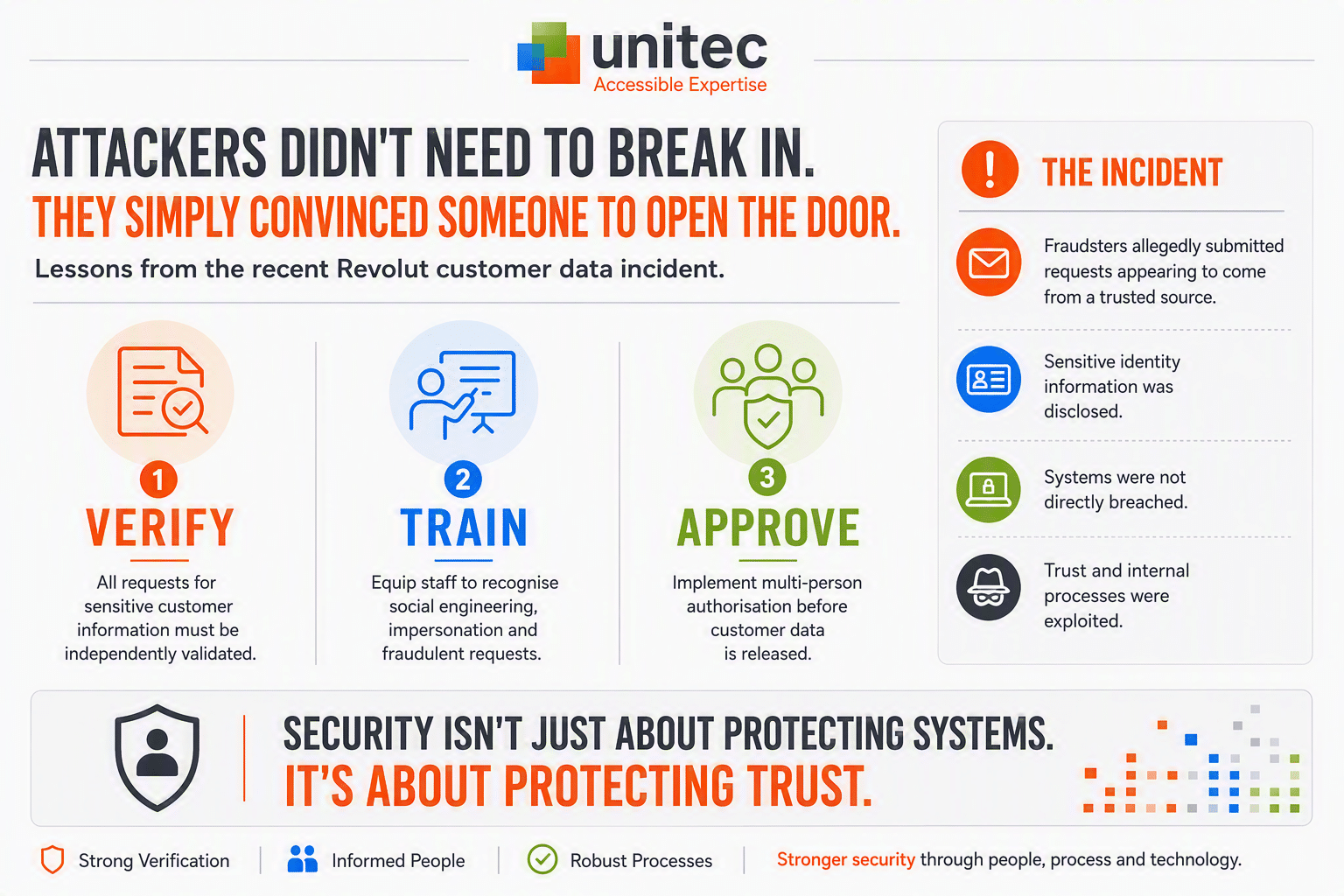
Unitec IT Solutions, headquartered in Munster, is at the forefront of this shift, redefining how SMEs approach IT, cybersecurity, and artificial intelligence. Rather than delivering traditional IT support, Unitec has developed a model that integrates secure infrastructure, proactive cybersecurity, and controlled AI adoption into a single, managed approach.
This strategy is helping SMEs move from reactive operations to resilient, future-ready businesses.
Closing the SME Digital Transformation Gap
Small and medium-sized businesses are under increasing pressure to modernise, yet many continue to face significant barriers.
The scale of the challenge is substantial:
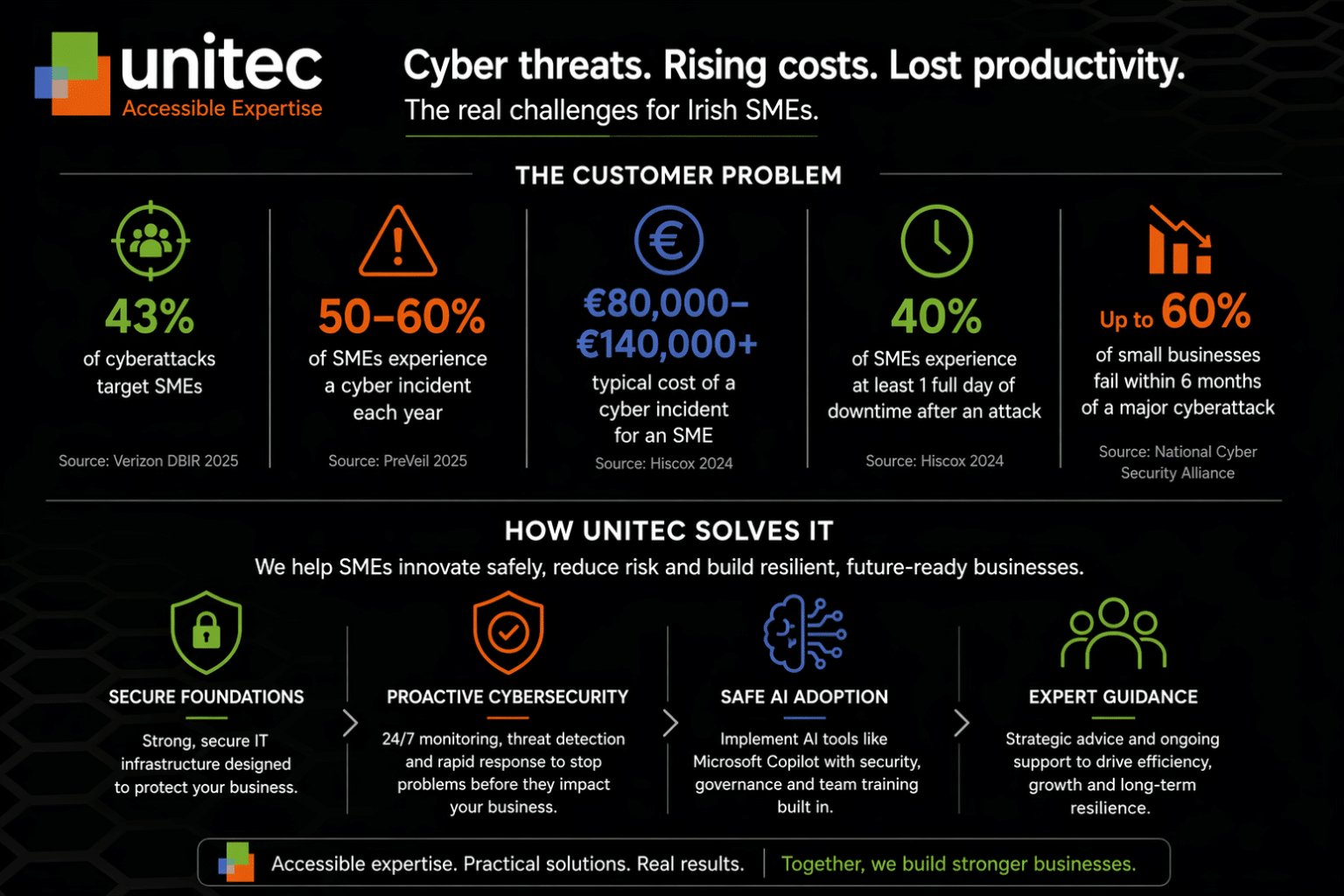
- Around 43% of all cyberattacks target SMEs [ec.europa.eu]
- Over 50–60% of small businesses report experiencing a cyber incident annually [thechannelco.com]
- Across Europe, nearly one-third of SMEs have already experienced a cybersecurity breach [techuk.org]
At the same time, digital adoption is accelerating, particularly in AI:
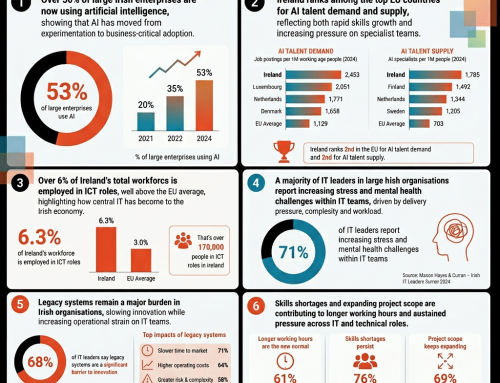
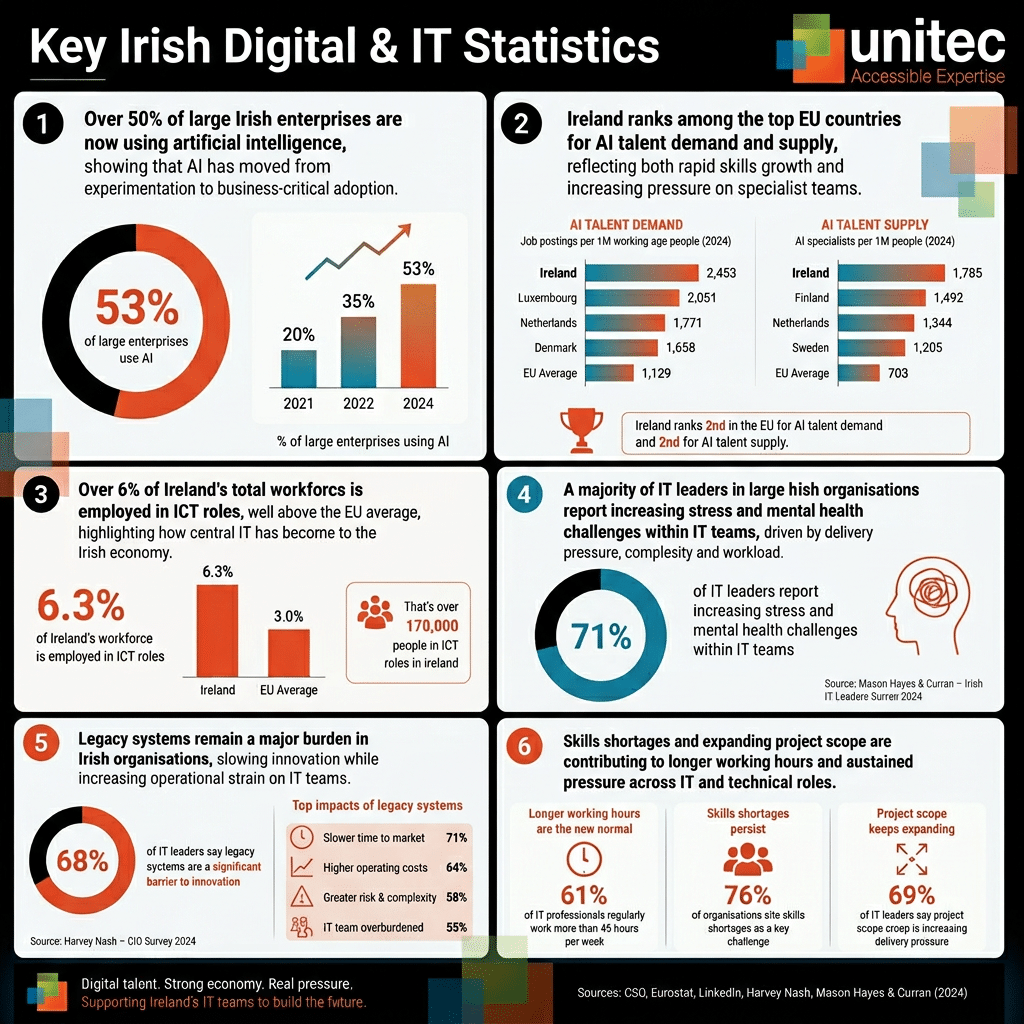
- Almost 4 in 10 SMEs are now actively using AI technologies [chambersawards.ie]
However, the gap is clear — many businesses are adopting technology faster than they are securing it.
This creates a growing risk where organisations are either:
- Delaying innovation due to fear of exposure, or
- Moving ahead without the safeguards required to protect their business
A New Model: Secure Digital Transformation
Unitec’s response is built on a simple principle: innovation must be underpinned by security and governance.
The company has developed a managed framework that integrates:
- Secure IT infrastructure
- Proactive cybersecurity and continuous monitoring
- Structured AI implementation, including Microsoft Copilot
- Ongoing advisory and optimisation
This ensures that businesses can adopt new technologies with confidence — balancing progress with protection.
The Real Cost of Cyber Incidents for SMEs
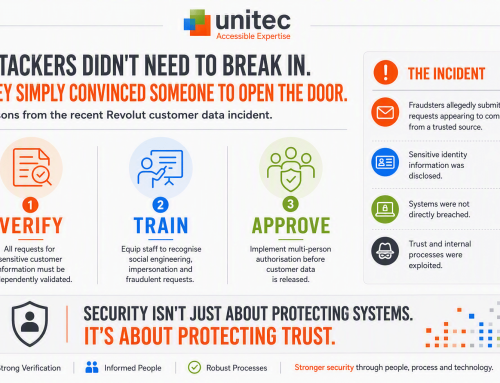
For SMEs, the impact of a cyber incident goes far beyond IT disruption — it directly affects revenue, operations, and long-term viability.
Industry data shows:
- The typical cost of a cyber incident for an SME ranges from approximately €80,000 to €140,000 per attack [themspsummit.com]
- In more severe cases, total impact — including recovery, downtime, and lost business — can run into millions of euro [ec.europa.eu]
- Around 40% of SMEs experience at least a full working day of downtime following an incident [themspsummit.com]
- In ransomware cases, downtime can extend to two to three weeks, severely disrupting operations [expertinsights.com]
More critically:
- Up to 60% of small businesses fail within six months of a significant cyberattack [nibusinessinfo.co.uk]
These figures underline a clear reality — cybersecurity is no longer a technical consideration, but a core business risk.
Making AI Practical and Safe
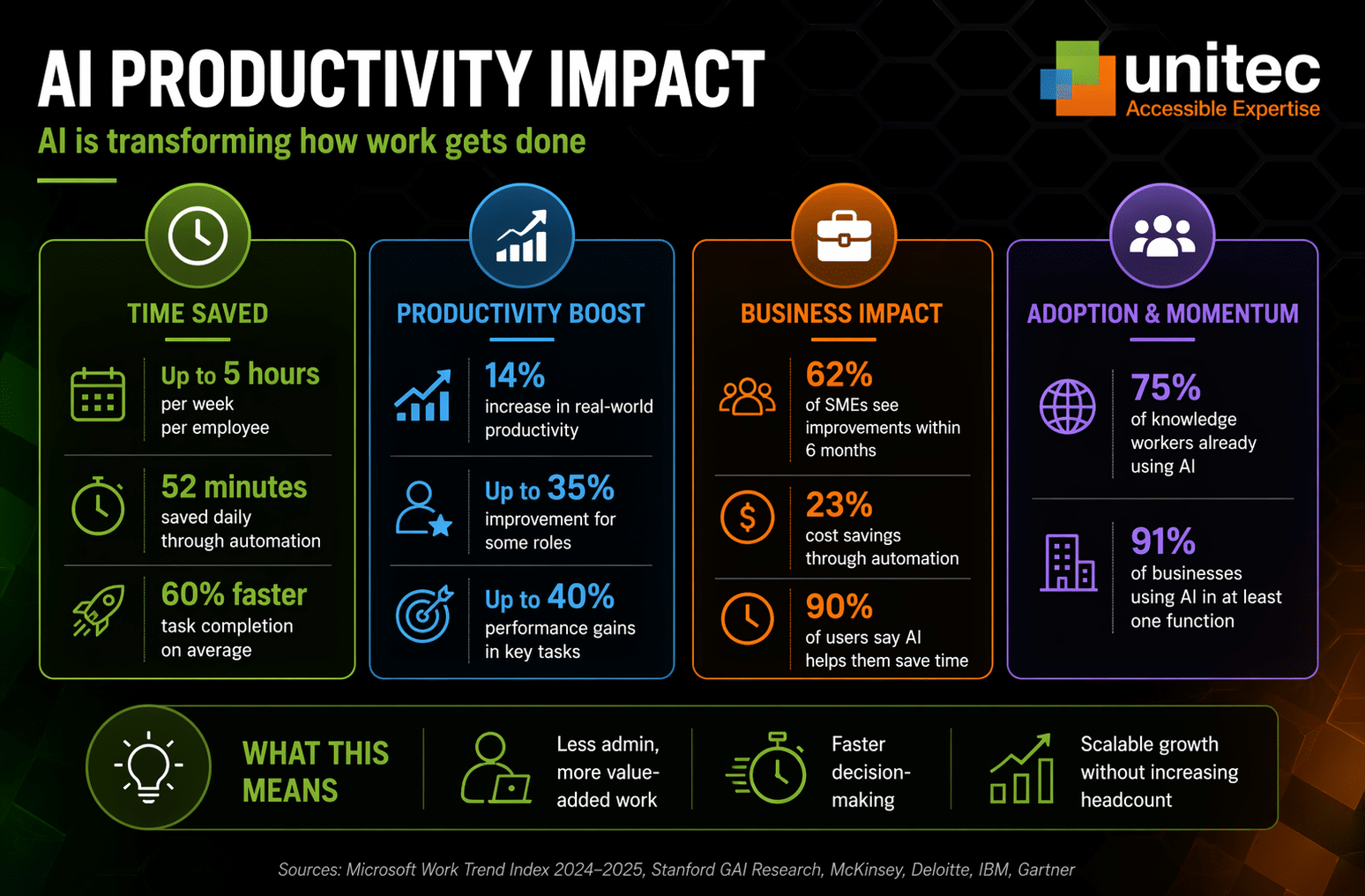
While AI offers significant productivity gains, it also introduces new challenges — particularly around data governance, compliance, and risk exposure.
Research indicates:
- AI adoption among SMEs has grown rapidly, but
- a majority still lack adequate security and governance controls [chambersawards.ie]
Unitec addresses this by ensuring:
- AI tools are deployed within secure, controlled environments
- Data access and usage are governed from the outset
- Staff are trained in practical and responsible use
Rather than introducing AI as a standalone solution, Unitec embeds it within a secure operational framework — ensuring innovation does not increase vulnerability.
Delivering Measurable Business Impact
The results of this structured approach are clear.
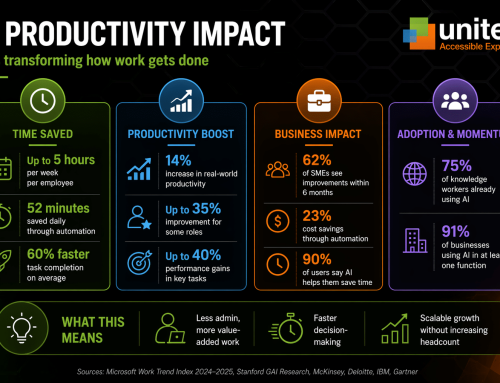
Businesses working with Unitec are achieving:
- Improved efficiency through automation and AI-supported processes
- Greater visibility and control over cybersecurity risks
- Increased confidence in technology adoption
- Enhanced scalability without increased operational complexity
This marks a shift from IT as a reactive support function to a strategic driver of growth and resilience.
Industry Leadership and Knowledge Sharing
Unitec is also playing an active role in supporting Irish businesses beyond its client base.
As part of this, two upcoming events will focus on practical guidance for SMEs:
- SETU Waterford – September 2026 A focused session on AI adoption, data governance, and risk for SMEs
- Dell Technologies, Limerick – October 2026 A strategic event addressing cybersecurity, AI integration, and business resilience
These events are designed to help businesses move from awareness to action, providing clear and practical insights into managing modern digital risks.
CEO Perspective
Speaking about Unitec’s approach, CEO Ian Power said:
“We are seeing more businesses recognise the potential of AI and digital transformation, but also the risks that come with it. Our role is to make that journey safe, structured, and practical.
Positioning Irish SMEs for the Future
SMEs account for the vast majority of businesses in Ireland and are central to regional economic growth.
As cyber threats increase and regulatory expectations evolve, the ability to combine innovation with control will become a defining factor in long-term success.
Unitec’s approach demonstrates that SMEs can:
- Adopt AI safely
- Improve productivity
- Strengthen resilience
- Compete more effectively
— all without introducing unnecessary complexity or risk.
Conclusion
Unitec IT Solutions is leading a new phase of digital transformation — one where innovation, security, and growth are not competing priorities, but integrated components of a single strategy.
By making cybersecurity accessible, AI practical, and transformation measurable, Unitec is helping Irish SMEs navigate an increasingly complex digital landscape with clarity and confidence.